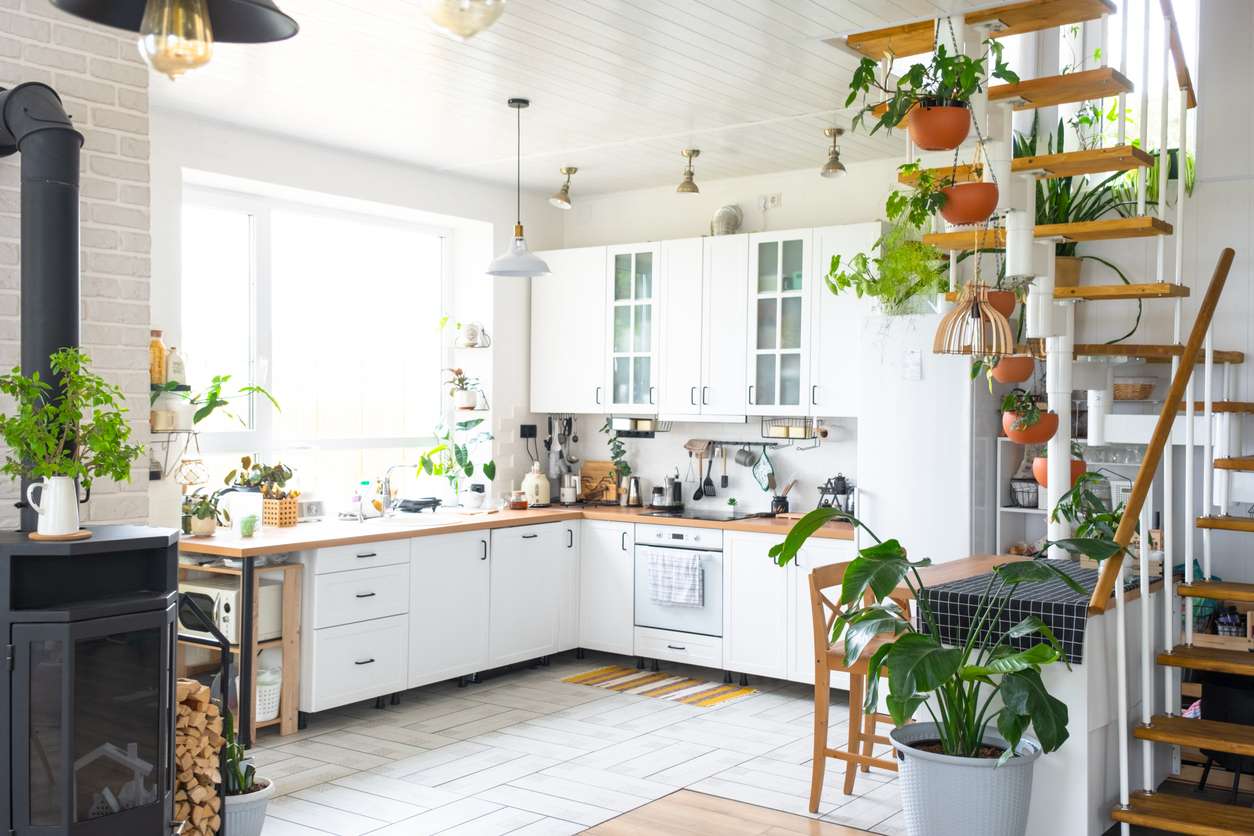

Countertops are usually the first thing homeowners fall in love with — and the last thing they feel confident deciding on. That gap makes sense. There are more countertop materials available today than at any point in the past, and the differences between them go well beyond color and price.
This guide is for Boise and Eagle homeowners who are planning a kitchen remodel and want to understand their options before walking into a showroom or sitting down with a designer. We cover the most common kitchen countertop types, what each one does well, where it falls short, and how to decide which material belongs in your home.
If you’re still in the early stages of planning your project, our comprehensive kitchen remodel guide for Boise homeowners is a good place to start before diving into materials.
Why Countertop Material Is One of the Most Important Decisions in Your Remodel
According to the 2026 U.S. Houzz Kitchen Trends Study, 91% of homeowners renovating their kitchens upgrade their countertops — more than any other feature. That figure isn’t surprising. Countertops cover more visual real estate than almost anything else in the kitchen, and they’re what your hands are on every single day.
The right material depends on three things: how you use your kitchen, what the space looks like, and how much maintenance you’re willing to do long-term. None of those answers are universal, which is why the “best kitchen countertops” question doesn’t have one right answer — only the right answer for your home.
Quartz Countertops
Quartz is engineered stone — roughly 90% ground quartz mineral bound with polymer resins, pigments, and other additives. It’s manufactured, not quarried, which means it’s consistent. Every slab looks the way it’s designed to look, without the natural variation you get from stone pulled from the earth.
That predictability is one of quartz’s biggest selling points. It’s also non-porous, which means it doesn’t need sealing and won’t harbor bacteria in the surface. For families with young children, or for homeowners who cook frequently and want a low-maintenance surface, quartz covers a lot of ground.
It does have limits. Quartz is not heat-resistant — setting a hot pan directly on the surface can damage the resin binders and discolor the material. It’s also sensitive to prolonged UV exposure, which means outdoor kitchens are not appropriate applications for quartz.
White Quartz Kitchen Countertops
White quartz has been the dominant countertop trend in new construction and mid-range remodels for most of the past decade. It pairs well with almost any cabinet color, reads as clean and bright, and photographs extremely well — which matters to homeowners thinking about resale.
That dominance is showing early signs of softening. The NKBA’s 2026 Kitchen Trends data shows quartz still holds the top spot overall, but interest has been declining since 2024 as homeowners shift toward warmer, more organic aesthetics. White quartz isn’t going out of style, but it’s no longer the default choice it once was. For Eagle homeowners investing at the $100K+ level, where design differentiation matters, white quartz can read as expected rather than considered.
Used in the right context — particularly kitchens with strong natural light, lighter cabinetry, or a transitional aesthetic — white quartz remains a strong, durable, and practical choice.
Best for: Busy households, low-maintenance priorities, resale-focused remodels, transitional or contemporary kitchens.
Cost range: $70–$130 per square foot installed.
Granite Countertops
Granite is 100% natural stone. It forms deep in the earth over millions of years, quarried in slabs that are each genuinely one of a kind. The variation in color, pattern, and veining is a feature, not a flaw — no two granite kitchens will look identical.
It’s one of the hardest natural materials used in residential kitchens. Granite resists scratches from knives and stands up well to heat, though using a trivet is still good practice. It does require periodic sealing — typically once a year or every few years depending on the stone’s porosity — to prevent staining and moisture absorption.
For Boise and Eagle homeowners who want a material with genuine natural character, granite is a strong contender. Idaho’s design culture tends toward organic, grounded aesthetics — wood tones, natural textures, connection to the landscape — and granite fits that sensibility well.
Best for: Natural stone enthusiasts, heat-heavy cooking environments, homeowners who want a unique surface, longer-term ownership.
Cost range: $60–$150 per square foot installed, depending on the slab.
For a detailed side-by-side comparison of quartz and granite, including sustainability data and health considerations, see our quartz vs. granite countertops guide.
Marble Kitchen Countertops
Marble is the luxury choice — full stop. No other countertop material has its combination of veining, depth, and visual drama. Calacatta, Carrara, and Statuario marble have defined aspirational kitchen design for decades, and that status hasn’t diminished.
What has changed is the conversation around marble’s practicality. It’s softer than granite and quartz, which means it scratches more easily. It’s also highly porous, etching quickly when exposed to acidic substances — citrus juice, vinegar, wine, tomato. Sealing helps but doesn’t eliminate the risk. In a kitchen used for serious cooking, marble requires an accepting mindset: patina and character develop over time, and that’s part of the material’s story, not a defect.
What to Know Before You Fall in Love With Marble
The homeowners who are happiest with marble countertops typically share a few things in common. They understand and accept the maintenance. They’re not using the kitchen as a cooking workhorse — or they’ve paired marble with a more durable island surface. And they’re investing in a high-end remodel where the material cost makes sense as a proportion of the total project.
For Eagle homeowners building kitchens in the $150K+ range, marble is completely appropriate and common. It communicates luxury in a way no engineered material fully replicates. For homeowners in the $60K range, it’s worth weighing whether the maintenance commitment and the relative cost make sense given the full scope of the project.
Best for: Luxury remodels, low-cooking-volume kitchens, homeowners who value aesthetics over maintenance minimalism.
Cost range: $100–$200+ per square foot installed, depending on the variety.
For design inspiration specific to Eagle’s luxury market, see our guide to luxury kitchen design trends for Eagle homes.
Quartzite — Not the Same as Quartz
Quartzite is one of the most misunderstood materials in the kitchen industry. It’s a natural stone — formed when sandstone is subjected to extreme heat and pressure — and it has no manufacturing relationship to engineered quartz countertops. The names are similar. The materials are not.
Quartzite is harder than granite and significantly harder than marble, which makes it a stronger candidate for kitchens where durability matters. It also develops the kind of soft, sweeping veining that homeowners associate with marble — without marble’s porosity and maintenance demands. According to the NKBA’s 2026 Kitchen Trends Report, quartzite ranked directly behind quartz among countertop materials gaining popularity, cited by 62% of industry professionals.
The tradeoff is cost and availability. Premium quartzite slabs — particularly the varieties with green, gold, or dramatic veining — can approach or exceed marble pricing. And because it’s a natural stone, it still requires sealing, though less frequently than marble.
Best for: Homeowners who want marble’s aesthetic with greater durability, design-forward remodels, natural stone lovers who cook frequently.
Cost range: $80–$175 per square foot installed, depending on the variety.
Porcelain and Sintered Stone
Porcelain slabs and sintered stone products (brands like Dekton and Lapitec are the most recognizable) represent the newest category of countertop materials gaining serious traction in premium remodels. They’re manufactured from natural mineral compounds that are compressed and fired at extreme temperatures — producing a surface that is virtually impervious to heat, UV light, scratching, and staining.
That UV resistance is what makes this category particularly relevant for one specific application.
The Best Countertop for Outdoor Kitchens
If you’re building or upgrading an outdoor kitchen in Boise or Eagle, porcelain and sintered stone are the clear frontrunners for countertop material. Quartz is eliminated by UV exposure. Marble and quartzite require sealing and can be damaged by freeze-thaw cycles. Granite performs well outdoors but still needs periodic maintenance.
Porcelain and sintered stone need none of that. They handle Idaho’s temperature swings — hot summers, cold winters — without degrading, and they don’t need sealing or special outdoor treatments. They can also be finished to convincingly mimic natural stone, wood, or concrete, which means the aesthetic range is broad.
The limitation is fabrication. These materials are harder to cut and work with than stone, which means not every countertop fabricator can handle them properly. Confirm experience before committing.
Best for: Outdoor kitchens, heavy-use cooking environments, homeowners who want maximum durability with minimal maintenance.
Cost range: $90–$200+ per square foot installed.
Butcher Block — When to Use It and When to Skip It
Butcher block countertops — wood slab surfaces, typically maple, walnut, or white oak — are having a genuine moment. The 2026 Houzz data shows butcher block surging in popularity specifically as an island countertop, used as a contrast surface against quartz or stone perimeter counters.
That’s also the most appropriate use case for butcher block in a primary kitchen. As a full perimeter surface, it’s vulnerable — wood absorbs moisture, scratches, and stains, and requires regular oiling and eventual resurfacing. As an island accent paired with a more durable perimeter material, it adds warmth, texture, and visual weight in a way no stone or engineered product replicates.
In Boise and Eagle kitchens, where wood-tone cabinetry (particularly white oak) is increasingly dominant, a butcher block island creates a cohesive material story without over-matching. It connects the countertop to the cabinetry in a way that feels intentional.
Best for: Island accent surfaces, warm or transitional aesthetics, homeowners who don’t mind some ongoing maintenance.
Cost range: $40–$100 per square foot installed.
How to Choose the Best Kitchen Countertop for Your Home
After covering seven material categories, the honest answer is still: it depends. But a few questions will narrow the decision quickly.
How do you actually cook? High-heat cooking, frequent baking, and heavy daily use push toward granite, quartzite, or sintered stone. Low-maintenance priorities push toward quartz.
What’s the finish level of the remodel? At the $60K range, quartz and granite are the primary playing field. At $100K+, quartzite, marble, and sintered stone are proportionally appropriate choices.
What does the rest of the kitchen look like? White quartz pairs well with almost anything but can read as expected in a high-end remodel. Natural stone — granite, marble, quartzite — adds a one-of-a-kind quality that engineered surfaces can’t fully replicate.
Is there an outdoor component? If the project includes an outdoor kitchen, plan for that surface separately. Sintered stone or porcelain for outdoors; your preferred natural stone or quartz for the interior.
What’s your tolerance for maintenance? Quartz and sintered stone are the genuinely low-maintenance choices. Granite and quartzite require periodic sealing. Marble requires the most attention and the most accepting mindset.
No countertop decision needs to be made in isolation. The best ones come from seeing actual slabs in person, understanding how the material performs in real-life conditions, and working with someone who can help connect material choice to the full design of the kitchen.
Talk Through Your Options With a Local Expert
At Pristine Kitchen & Bath, we’ve helped Boise and Eagle homeowners navigate countertop decisions across every price point and every material category. We bring over 12 years of experience remodeling kitchens across the Treasure Valley — from thoughtful refreshes in Meridian and Nampa to full custom builds in Eagle’s most prestigious neighborhoods, including Two Rivers, Castlerock, and Banbury Meadows.
If you’re ready to explore what the right countertop looks like for your kitchen, we’d love to have that conversation.
Schedule your free consultation with Pristine Kitchen & Bath.