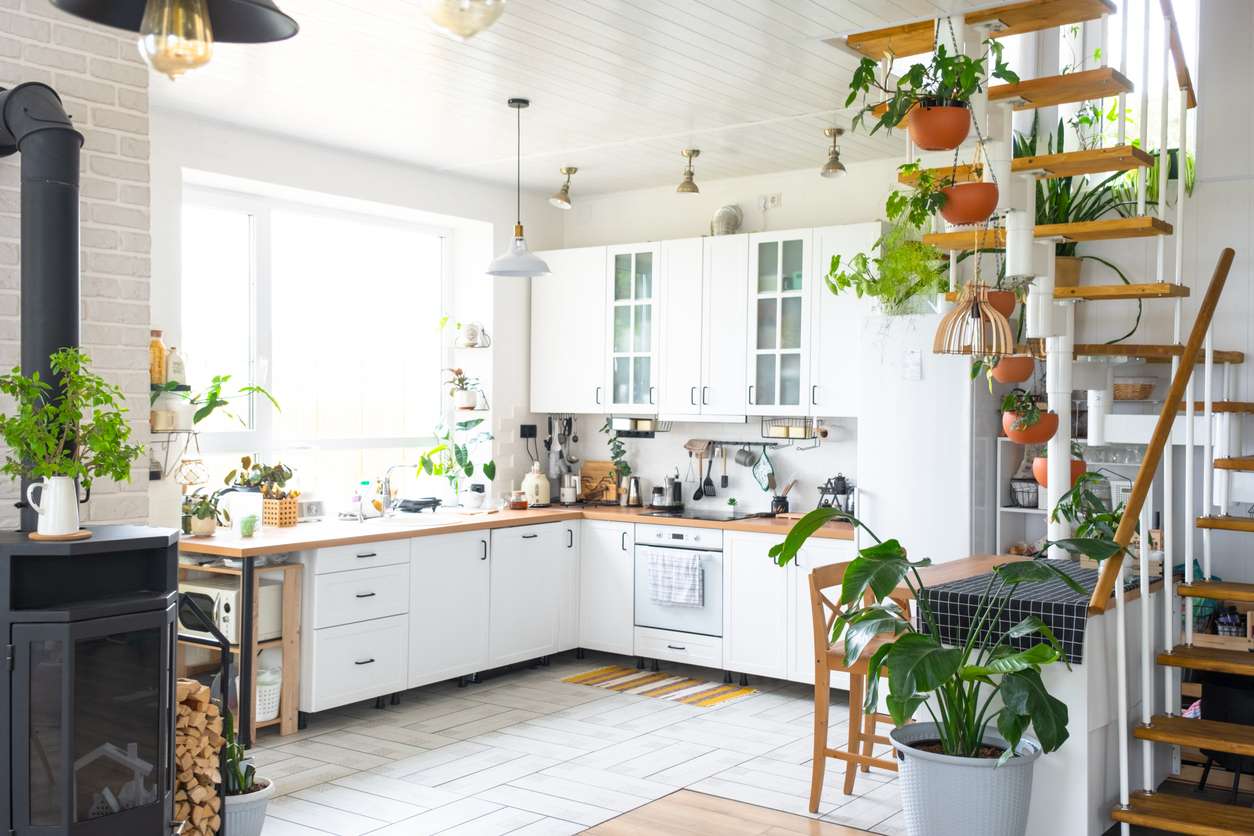
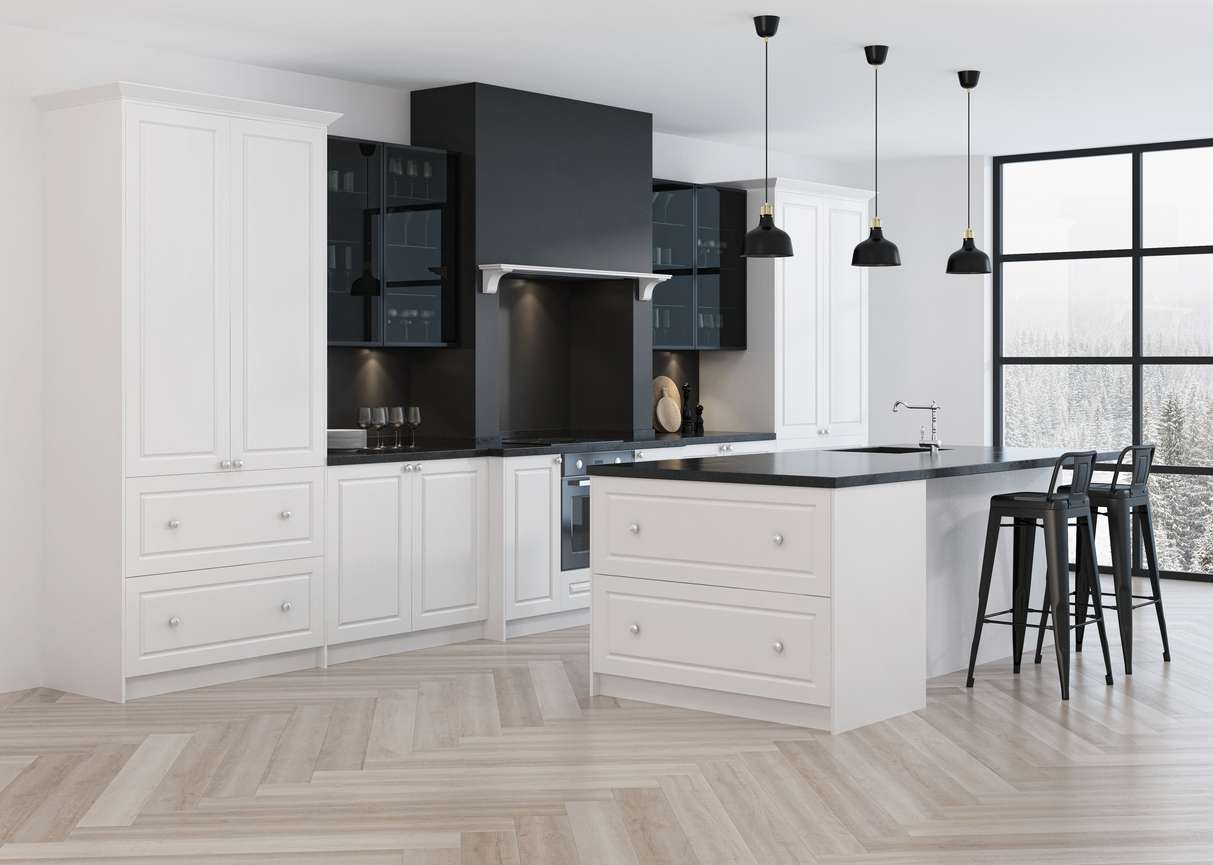
When you’re planning a kitchen remodel in Boise, flooring is one of the decisions that trips people up most. It’s the largest surface in the room. It takes more wear than any other material you’ll choose. And it has to work with your cabinets, your countertops, your lifestyle, and your budget — all at the same time.
There’s no single right answer to what the best kitchen flooring is. But there are better answers for different homes, different households, and different remodel scopes. This guide walks through the options most commonly installed in Treasure Valley kitchens, what each one does well, where each falls short, and how to match the right material to your specific project.
Why kitchen flooring deserves more thought than most homeowners give it
Kitchen floors take a beating. They absorb spills, foot traffic, dropped pots, pet nails, and decades of daily use. They also set the visual tone for the whole space — especially in open-concept homes where the kitchen floor flows into the dining and living areas.
The right choice depends on three things working together: durability for your household, appearance that fits your design, and a price point that makes sense within your overall remodel budget. Get all three aligned, and your floor becomes an asset. Ignore any one of them, and it becomes a problem you’ll notice every day.
For homeowners doing a kitchen remodel in Boise, there’s an additional consideration: Idaho’s climate. The Treasure Valley sees hot, dry summers and cold winters, which means indoor humidity swings seasonally. Some flooring materials handle that well. Others don’t.
The main options: what you’re actually choosing between
Luxury vinyl plank (LVP)
Luxury vinyl plank has become the most commonly specified kitchen flooring in Boise remodels over the past several years — and for good reason. It’s waterproof, durable, comfortable underfoot, and available in a wide range of looks that convincingly mimic hardwood, stone, and tile.
What it does well:
- Fully waterproof at the plank level — no seam penetration risk
- Handles Idaho’s humidity swings without warping or gapping
- Stands up well to pets, kids, and high-traffic households
- Softer underfoot than tile — easier on legs and backs during long cooking sessions
- Installs over existing subfloors in most cases, which can reduce labor cost
- Wide price range from budget-friendly to high-end premium products with better wear layers and more realistic visuals
Where it falls short:
- Can be damaged by very sharp impacts (heavy cast iron dropped from height)
- Lower-end products can look noticeably artificial up close
- Not as long-lived as quality tile or hardwood in the 30-year range
Best for: Families with kids and pets, open-concept homes where flow and comfort matter, homeowners who want hardwood aesthetics without hardwood risk in a moisture-prone space.
Porcelain tile
Porcelain tile has been the gold standard for kitchen flooring for decades, and it still earns that reputation. It’s hard, waterproof, stain-resistant, and available in an enormous range of styles — including large-format slabs that have become increasingly popular in Boise’s higher-end kitchen remodels.
What it does well:
- Extremely durable — properly installed porcelain tile lasts the life of the home
- Fully waterproof with no exceptions
- Easy to clean; resistant to stains, grease, and most household chemicals
- Available in large formats (24×24, 24×48) that reduce grout lines and give a more seamless look
- Holds up to Idaho’s temperature extremes without issue
- Adds meaningful resale value, particularly in premium finishes
Where it falls short:
- Hard underfoot — uncomfortable for long periods of standing
- Cold in winter, which can be notable in Boise’s colder months
- Grout lines require ongoing maintenance (sealing, cleaning)
- Installation is more complex and labor-intensive, which increases cost
- Tile and grout can crack if the subfloor has any flex — proper subfloor prep is essential
Best for: Homeowners prioritizing longevity and low maintenance, kitchens with radiant floor heating (which solves the cold issue), higher-end remodels where premium finish is a priority.
Hardwood
Solid hardwood is the aspirational choice for a lot of Boise homeowners — and it’s genuinely beautiful. In the right application, it brings warmth, character, and a timeless quality that no other material matches. But the kitchen is the one room in the house where hardwood requires the most careful consideration.
What it does well:
- Unmatched visual warmth and authenticity
- Can be refinished multiple times, extending life significantly
- Adds strong resale appeal, particularly in higher-end homes
- Works beautifully in open-concept layouts where the floor flows from kitchen into living areas
Where it falls short:
- Vulnerable to moisture — spills that aren’t cleaned up quickly can cause warping, staining, and cupping
- Reacts to humidity changes: Boise’s dry winters and seasonal swings can cause gapping or movement
- Higher maintenance requirement than any other option on this list
- Not ideal for households with dogs or heavy kitchen use
Best for: Homeowners with lower-traffic kitchens, open-concept homes where visual continuity with adjacent rooms is a design priority, clients willing to maintain the floor carefully over time. Often paired with a high-quality finish or site-applied sealant to improve moisture resistance.
Engineered hardwood
Engineered hardwood gives you the hardwood look with meaningfully better dimensional stability. It’s constructed with a real wood veneer over a plywood core, which makes it far more resistant to Idaho’s humidity swings than solid hardwood.
What it does well:
- Real wood surface — looks and feels like hardwood
- Significantly more stable than solid hardwood in variable humidity environments
- Can be refinished once or twice depending on veneer thickness
- Works well in kitchens where visual continuity with hardwood in adjacent rooms matters
- Available in wider planks and more species than LVP at comparable price points
Where it falls short:
- Still not fully waterproof — standing water or repeated moisture exposure causes damage
- Thinner veneer products cannot be refinished
- More expensive than LVP for comparable aesthetics
Best for: Open-concept homes where hardwood runs through adjacent rooms and a hard material transition isn’t desirable, homeowners who want a real wood surface and are willing to be disciplined about moisture management.
Natural stone (slate, travertine, quartzite)
Natural stone tile occupies a niche in kitchen flooring. It’s beautiful, unique, and durable, but it comes with a set of considerations that make it most appropriate for specific project types.
What it does well:
- Visually distinctive — no two installations look alike
- Extremely durable when properly sealed and maintained
- Works well aesthetically in kitchens featuring natural stone countertops
- Long life when cared for properly
Where it falls short:
- Requires regular sealing — porous stone stains if neglected
- Heavier and more complex to install than porcelain
- More expensive per square foot and in labor
- Some stones (travertine in particular) have natural pitting that traps debris
Best for: Higher-end custom kitchens where design cohesion with natural stone countertops or a specific aesthetic is the goal. Less practical as an everyday choice for busy family kitchens.
How to think about flooring within your remodel budget
Flooring is typically 10–15% of a kitchen remodel budget — though that percentage shifts depending on total project scope. In a kitchen remodel in Boise at Pristine’s entry tier, flooring is one of the areas where smart material selection can meaningfully affect overall value. At higher project levels, it’s often an opportunity to use premium materials that anchor the room.
Here’s a rough ballpark on installed cost (material + labor) for each option:
- LVP: $6–$12 per square foot installed
- Porcelain tile: $10–$20 per square foot installed (more for large format or complex patterns)
- Engineered hardwood: $10–$18 per square foot installed
- Solid hardwood: $12–$22 per square foot installed
- Natural stone: $15–$30+ per square foot installed
These are ranges — actual cost depends on the product selected, subfloor conditions, layout complexity, and current labor rates in the Treasure Valley. Zach and the team walk through flooring costs as part of every project consultation, so you’re not guessing when you get to the decision point.
The subfloor question most homeowners don’t ask about until it’s too late
No flooring decision happens in isolation from what’s underneath it. Kitchen subfloors — particularly in Boise’s older homes in the North End, Boise Bench, and Southeast Boise — can have issues that need addressing before any new floor goes down.
Flex in the subfloor causes tile to crack. Moisture in the subfloor causes hardwood to warp. Unevenness causes LVP to telegraph imperfections. The best flooring material installed over a compromised subfloor will underperform from day one.
At Pristine, subfloor assessment is part of the pre-construction process. If there’s work to be done before the new floor goes in, you’ll know about it upfront — not as a change order in week three.
What actually holds up in Idaho homes
Boise isn’t the Pacific Northwest — the moisture risk profile is different. But the seasonal humidity swings, cold winters, and the reality of Idaho family life (dogs, ski boots, mudrooms that flow into kitchens) all factor into flooring performance over time.
In Pristine’s experience across 12+ years of kitchen remodels in the Treasure Valley, the materials that consistently perform well without requiring special handling are LVP and porcelain tile. Both are fully waterproof, both handle Idaho’s climate without issue, and both are available at quality levels that work in everything from a thoughtful refresh to a full luxury remodel.
Engineered hardwood works well for the right client — someone who wants the real wood feel and will maintain the floor. Solid hardwood works in the right application, but it requires a realistic conversation about household habits before it goes in.
Flooring in the context of your full kitchen remodel
Flooring doesn’t exist by itself. It has to work with your cabinetry, your countertop material, and your overall design direction. Light-toned LVP with a wood grain reads differently against white shaker cabinets versus dark walnut. Large-format porcelain with minimal grout lines reinforces a modern aesthetic. Wide-plank engineered oak bridges a kitchen-to-living-room transition naturally.
These decisions are interconnected, which is why the best time to think about flooring is at the beginning of a remodel — not after the cabinets are already on order.
If you’re working toward a kitchen remodel in Boise or Eagle and want to talk through the flooring decision alongside the full scope, schedule a consultation with Pristine. We’ll help you find the material that fits your home, your household, and your remodel.