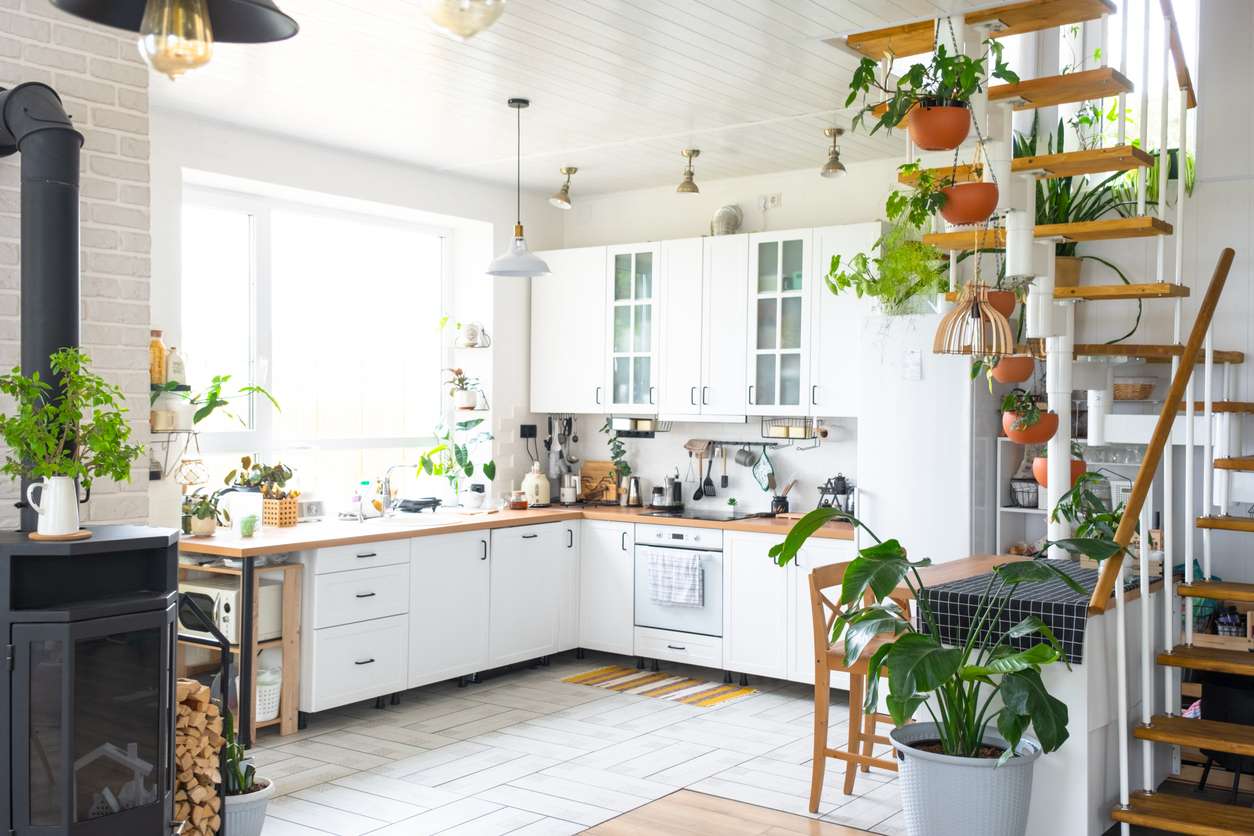
When homeowners start planning a kitchen remodel in Boise, countertops are almost always the first thing they get emotional about — and for good reason. According to the 2025 U.S. Houzz Kitchen Trends Study, 91% of renovating homeowners say countertops are their single most-upgraded kitchen feature, ranking above cabinets, backsplash, and appliances.
So the stakes are real. And the quartz vs. granite debate is one of the most genuinely difficult decisions in a kitchen remodel — not because one is objectively better, but because they’re excellent in different ways for different homeowners.
What most comparison guides won’t tell you: this decision has dimensions that go well beyond scratch resistance and maintenance. Market trends, sustainability data, and health considerations all play a role — and they’re almost entirely absent from the typical online comparison article.
This guide covers all of it, with data sourced from government agencies, trade associations, academic institutions, and ISO-certified environmental reports. By the end, you’ll know exactly which material fits your kitchen, your lifestyle, and your values.
Ready to talk through your countertop options with a local expert? Schedule your free consultation with Pristine Kitchen & Bath.
What Are They Actually Made Of?
Before comparing performance, it helps to understand what these two materials fundamentally are — because they’re very different things.
Granite
Granite is a 100% natural igneous rock. It forms deep in the earth over millions of years as magma cools and crystallizes, producing a material composed of quartz, feldspar, mica, and other minerals. Each granite slab is quarried directly from the earth, cut to size, and finished — no manufacturing, no additives.
Because it’s natural, every granite slab is one-of-a-kind. The mineral content — and therefore the color, pattern, and veining — varies from slab to slab. Granite contains crystalline silica at varying concentrations, typically between 10% and 45% depending on the specific stone.
Quartz (Engineered Stone)
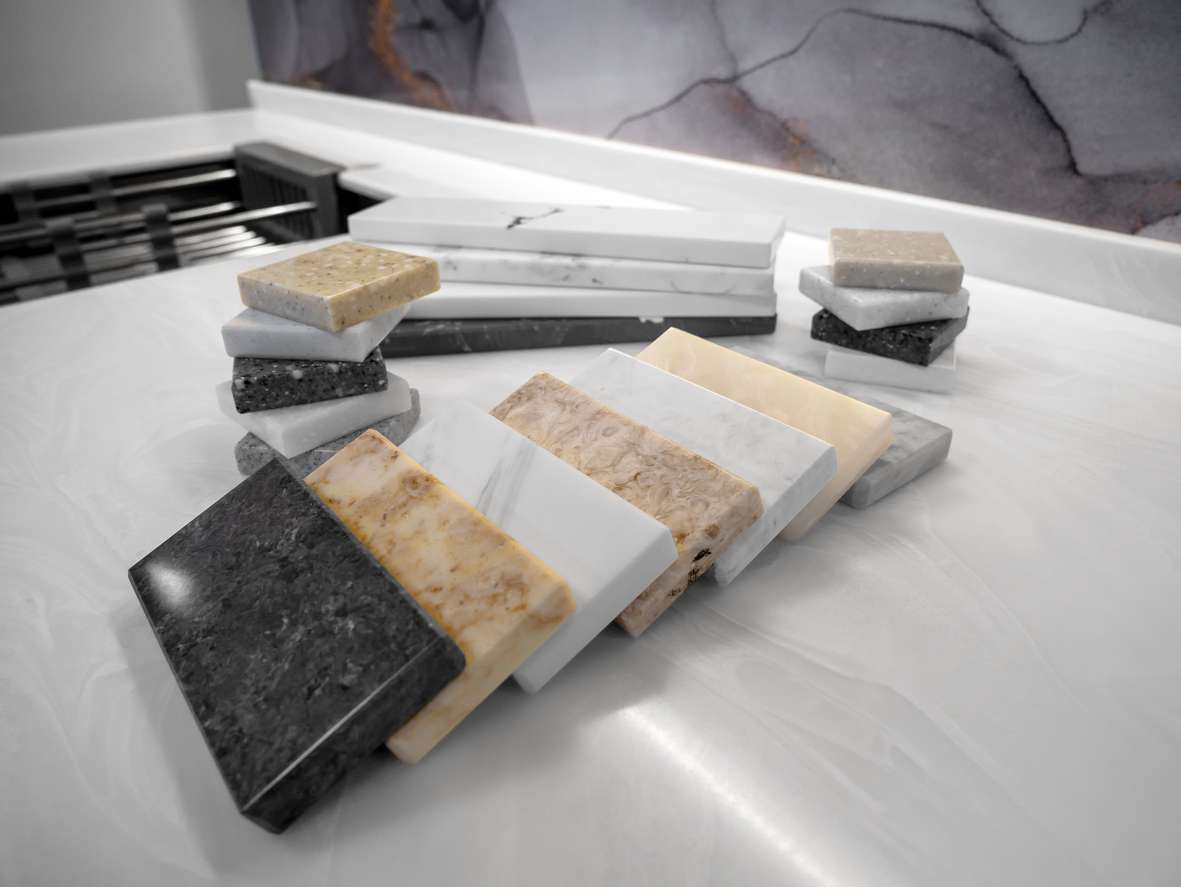
Quartz countertops are manufactured, not quarried. According to South Dakota State University Extension, engineered quartz is made from approximately 90% ground quartz mineral combined with 8–10% polymer resins, pigments, and other additives. The result is a non-porous, highly consistent surface available in a wide range of colors and patterns — including convincing marble and granite looks.
Because it’s engineered, quartz offers color and pattern consistency that natural stone can’t match. What you see in the showroom is exactly what you’ll get installed. That predictability is a major part of its appeal. The tradeoff: the silica content in engineered stone can reach as high as 93%, according to research from Michigan State University’s Occupational and Environmental Medicine program — a fact that has significant implications in the fabrication process (more on that in the health section).
Which Countertop Is More Popular Right Now?
This is where the data gets interesting — and where it diverges from what most articles will tell you.
Quartz Has Led for Over a Decade — But Its Lead Is Narrowing
Quartz’s rise has been extraordinary. A Caesarstone investor presentation citing Freedonia Group market research documented quartz’s global market share climbing from just 8% of all countertop materials in 2010 to 19% by 2020, while granite’s share declined from 35% to 28% over the same period. In the U.S. specifically, quartz holds approximately 47% of countertop demand by volume — the highest concentration of any single market globally.
That dominance continued through the early 2020s. The 2022 U.S. Houzz Kitchen Trends Study showed quartz at 42% of homeowner countertop choices versus granite at 24%.
But something shifted. By 2025, the Houzz Kitchen Trends Study showed quartz declining to 39% — down from a peak of 46% — while interest in natural stone has been quietly growing.
What the Experts Are Saying for 2025 and 2026
The professional design community is moving toward natural stone. The Fixr 2025 Kitchen Design Trends Report, surveying 67 interior design and home staging experts, found that 58% identify natural stone as the most in-demand countertop material — and 39% name it the single most-wanted high-end kitchen feature.
The NKBA 2026 Kitchen Trends Report, representing nearly 55,000 kitchen and bath industry professionals, shows quartz and quartzite tied at 62% among professional specifications — a signal that the era of quartz’s unchallenged dominance may be ending.
The takeaway: Quartz remains the most popular choice among everyday homeowners. But design professionals and luxury buyers are increasingly gravitating back toward natural stone. Where you fall on that spectrum matters for this decision.
Durability Showdown: Which Countertop Actually Holds Up to Daily Kitchen Life?
Both materials are highly durable — but they fail in different ways.
Scratch Resistance
| Material | Mohs Hardness Rating | Scratch Resistance |
| Quartz (engineered) | 7+ | Excellent |
| Granite | 6–7 | Very good |
Quartz edges out granite slightly on scratch resistance due to its engineered composition. In practice, both materials resist everyday scratching from knives and cookware extremely well. Neither should be used as a cutting board.
Heat Resistance: Granite’s Clear Advantage
This is one of granite’s most significant advantages. As a material that formed under extreme geological heat, granite handles high temperatures with ease. Hot pans placed directly on granite generally won’t cause damage.
Quartz, on the other hand, contains polymer resins that begin to discolor, warp, or crack when exposed to sustained heat above roughly 300°F. Trivets and heat pads are essential with quartz countertops.
Stain and Liquid Resistance: Why Quartz Wins
Because quartz is non-porous by design, liquids can’t penetrate the surface — making it inherently resistant to stains, bacteria, and moisture. Granite is porous and should be sealed periodically to prevent liquids from soaking in. Unsealed or poorly sealed granite is vulnerable to staining from wine, oil, and acidic foods.
Long-Term Longevity
The Polycor Life Cycle Assessment of Granite and Marble Stone Countertops — an ISO 14040/14044-compliant environmental study — estimates that natural stone countertops are designed to last the lifetime of a building: 75 years or more. The industry’s standard reference service life for countertops used in environmental modeling is just 10 years, meaning granite far outlasts what regulatory benchmarks even account for.
Quick comparison:
| Category | Quartz | Granite |
| Scratch resistance | ✅ Excellent | ✅ Very good |
| Heat resistance | ⚠️ Moderate (use trivets) | ✅ Excellent |
| Stain resistance | ✅ Non-porous, no sealing needed | ⚠️ Requires periodic sealing |
| Long-term lifespan | Very good | ✅ 75+ years (LCA estimate) |
How Much Does Each Cost? A Realistic Price Breakdown for 2025
Quartz and granite occupy overlapping price ranges — neither is categorically more expensive than the other. The bigger driver is slab rarity, pattern complexity, and where you are in the market.
Typical Installed Cost Ranges
| Tier | Quartz (installed/sq ft) | Granite (installed/sq ft) |
| Budget | $50–$70 | $40–$65 |
| Mid-range | $70–$100 | $65–$100 |
| Premium/Exotic | $100–$150+ | $100–$200+ |
Rare granite varieties with dramatic veining or unusual colors can significantly exceed premium quartz pricing. On the other end, builder-grade granite is often less expensive than entry-level quartz.
Putting It in Context
The 2025 Houzz Kitchen Trends Study found that the national median spend on a major kitchen remodel as of mid-2024 was $60,000 — and the top 10% of spenders invested $180,000 or more. At those budget levels, the per-square-foot cost difference between quartz and granite becomes a relatively minor variable compared to cabinetry, appliances, and labor.
What this means for your decision: if budget is the deciding factor, both materials are viable at multiple price points. The real cost question is which slab you fall in love with — and that’s different for everyone.
For a full breakdown of what a kitchen remodel costs in the Treasure Valley, see our kitchen remodel cost guide.
Maintenance and Care: Which One Is Easier to Live With Day-to-Day?
Quartz: High Performance, Low Effort
Quartz requires essentially no maintenance beyond routine cleaning. Because it’s non-porous, it never needs sealing — just wipe it down with mild soap and water. The main things to avoid: harsh abrasive cleaners, prolonged UV exposure (which can fade certain colors near sunny windows), and direct heat contact.
Granite: A Little More Involved
Granite is low-maintenance, but not zero-maintenance. The Polycor LCA used a resealing cadence of every five years in its environmental modeling for stone countertops — a reasonable real-world benchmark depending on usage and the quality of the initial sealer. Day-to-day cleaning is simple: soap, water, and a soft cloth.
Verdict: Quartz is the lower-maintenance material, especially for busy family kitchens. Granite’s maintenance needs are modest but real.
Environmental Impact: Which Countertop Is the Greener Choice?
This section doesn’t appear in most quartz vs. granite comparisons — which is exactly why it matters. If environmental credentials are a priority for your kitchen remodel, the data strongly favors granite.
VOC Emissions: Granite’s LEED Advantage
According to the Polycor Life Cycle Assessment, natural stone countertops are inherently non-emitting — they produce zero VOC (volatile organic compound) emissions and qualify for LEED credits based on this profile. Engineered quartz, by contrast, contains synthetic resins and polymers that may emit trace VOCs depending on the manufacturer and formulation.
Recycling and End-of-Life
The same Polycor LCA, drawing on U.S. EPA construction waste disposal data, found that 68.5% of natural stone countertops are recycled at end-of-life, with 31.5% going to landfill. Granite’s mineral composition makes it relatively straightforward to repurpose or recycle. Quartz’s resin content complicates the recycling process — the polymer binders make it significantly harder to recover as a recyclable material.
Carbon Footprint
The Polycor Environmental Product Declaration (EPD) for Granite Countertops — a Type III ISO 14025-certified environmental declaration — confirms granite as one of the lowest embodied-carbon countertop options available. Carbon performance varies by only approximately 6% across different granite product variants, meaning the environmental performance of granite is highly consistent and predictable regardless of which specific stone you choose.
Environmental summary:
| Factor | Quartz | Granite |
| VOC emissions | Trace possible (resins) | Zero — LEED qualified |
| End-of-life recyclability | Difficult (polymer binders) | 68.5% recycled (EPA data) |
| Embodied carbon | Moderate (manufacturing) | Low (quarried, minimal processing) |
| Lifespan | Very good | 75+ years — fewer replacements |
Health and Safety: Should You Be Worried About Radon in Granite or Silica in Quartz?
This is where misinformation is most common. Let’s look at what government sources actually say — for both materials.
The Granite-Radon Question: What the Government Data Actually Says
Concerns about radon in granite countertops have circulated for years. The New Jersey Department of Environmental Protection’s official guidance on granite countertops and radon addresses this directly. While granite does contain trace naturally-occurring radioactive minerals, the DEP’s guidance notes that standard home radon test kits should NOT be placed in kitchens — moisture, heat, and exhaust systems distort the results. The recommendation is to test the home as a whole, not the countertop specifically.
The consensus from environmental agencies: granite countertops are not a meaningful source of radon exposure for homeowners. The concern is legitimate in the abstract but overstated as applied to countertops.
Silicosis and Engineered Stone: A Fabrication Worker Crisis, Not a Consumer Risk
This is a more serious issue — and one that responsible content on this topic should address transparently.
A joint OSHA and NIOSH Hazard Alert identifies crystalline silica exposure as a significant health hazard for workers involved in manufacturing, finishing, and installing natural and engineered stone countertops. Engineered quartz can contain up to 95% crystalline silica. Workers using handheld grinders on high-silica engineered stone had average respirable crystalline silica exposure of approximately 238 µg/m³ — nearly five times OSHA’s permissible exposure limit of 50 µg/m³. Approximately one quarter of OSHA breathing zone samples from stone countertop workplaces exceeded that limit during 2022 inspections.
The California Department of Public Health has identified silicosis as a serious occupational health crisis among countertop fabrication workers, with dozens of confirmed cases and deaths in California alone — most affecting workers in their 30s and 40s.
Critical distinction: Finished, installed quartz countertops do not expose homeowners to crystalline silica. The risk exists during the cutting, grinding, and fabrication process — at the shop level, before the countertop ever reaches your home. This is a supply chain and worker safety issue, not a consumer safety issue.
That said, it’s worth knowing — especially as an informed buyer. Choosing fabricators who follow OSHA dust control protocols matters both for worker health and for the integrity of your finished product.
The OSHA/NIOSH alert also notes significant variation in silica content between quartz brands — some engineered stones contain as little as 0.2% crystalline silica while others approach 95%. Not all quartz countertops are created equal from a fabrication safety standpoint.
Design and Aesthetics: Which One Looks Better in a Modern Kitchen?
Granite: Unique, Natural, One-of-a-Kind
Granite’s biggest aesthetic asset is also its defining characteristic: no two slabs are identical. The mineral formations, color shifts, and natural veining patterns that develop over geological time cannot be replicated. If you want a kitchen that is genuinely unique, granite delivers that.
Consistent with broader design trends, veined patterns are overwhelmingly popular among renovating homeowners. According to the 2025 Houzz Kitchen Trends Study, veined countertop patterns are