
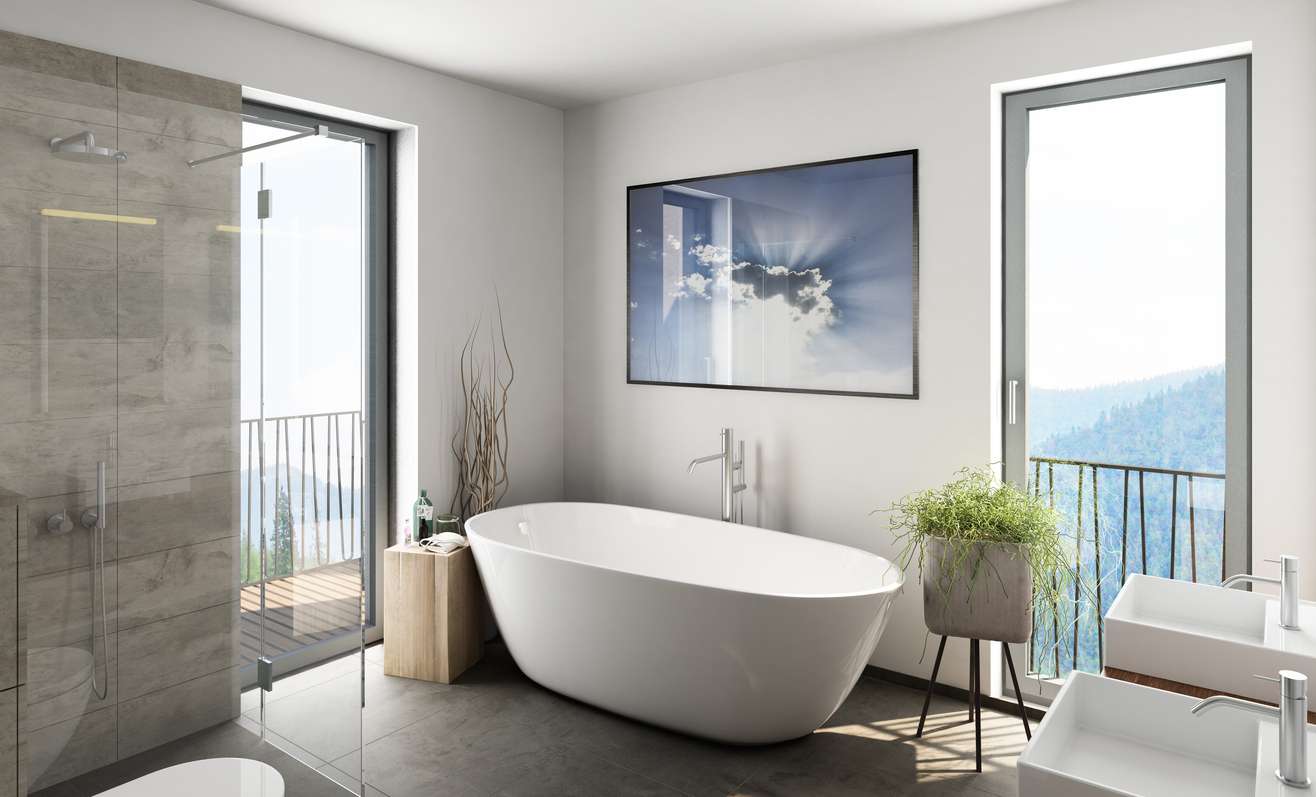
You’ve walked past that dated bathroom for years. Maybe it’s the worn tile, the cramped alcove tub, or just a layout that feels stuck in the 1990s. But lately, you’ve been dreaming of something different—a bathroom remodel in Boise that transforms your space into a spa-like retreat where you can wash away the stress of the day.
There’s nothing quite like the elegance of a freestanding tub to transform a functional bathroom into a personal sanctuary. It’s more than just a fixture; it’s a statement piece that changes the entire feeling of your home. However, moving from inspiration to installation involves more than just picking out a beautiful tub.
You probably have questions about plumbing, floor strength, and whether it will actually fit in your space. We’re here to help you navigate those decisions with confidence, just as we’ve helped homeowners across the Treasure Valley create bathrooms they love.
Freestanding tubs have become a hallmark of modern bathroom design throughout the Treasure Valley—especially in Eagle, Meridian, and Boise. They offer a sense of openness and luxury that built-in tubs simply can’t match. But unlike a standard swap-out, installing one of these beauties is a significant renovation project that touches almost every part of your bathroom.
From the hidden plumbing beneath the floor to the tile you choose to surround it, every detail matters. We believe that a successful remodel isn’t just about the final look—it’s about the planning that ensures your new tub performs perfectly for years to come.
Whether you’re looking to create a master suite centerpiece or maximize a smaller bathroom, this guide will walk you through everything you need to know. Let’s explore the real costs, the necessary preparations, and the design choices that will bring your vision to life.
Is a Freestanding Tub Right for Your Bathroom?
Before we dive into the technical details, it’s worth pausing to consider if a freestanding tub fits your lifestyle. They are undeniably beautiful, serving as sculptural focal points that can make a bathroom feel larger by exposing more floor space. However, they do come with practical trade-offs.
For one, you lose the convenient ledge for shampoo and soap that built-in tubs offer, meaning you’ll need creative storage solutions. Cleaning also requires reaching around and behind the tub, which can be tricky in tight corners. If you love long soaks and want a dramatic aesthetic, a freestanding tub is perfect. If you need a practical daily shower for young kids, a built-in might still be the better choice.
| Feature | Freestanding Tub | Built-In (Alcove/Drop-In) |
|---|---|---|
| Aesthetic | Statement piece, spa-like, open feel | Practical, integrated, space-efficient |
| Total Cost | $3,000 – $15,000+ | $1,500 – $6,000 |
| Space Required | Larger (allows clearance around tub) | Compact (fits flush against walls) |
| Installation | Complex plumbing, floor prep | Standard plumbing, existing footprint |
| Shower Use | Difficult (requires curtain ring) | Easy (wall-mounted shower) |
| Cleaning | Harder (must clean all sides/floor) | Easier (enclosed sides) |
| Storage | External caddies/tables needed | Built-in ledges available |
| Resale Value | High in luxury markets | Broader appeal, standard expectation |
What Does a Freestanding Tub Renovation Cost?
This is the most common question we hear from homeowners in Eagle, Boise, and throughout the Treasure Valley. While a freestanding tub can be purchased for under $1,000, the tub itself is just one part of the equation. A full renovation involving a freestanding tub typically ranges from $3,000 to $15,000+ depending on materials and plumbing complexity.
Here is a transparent breakdown of what you can expect to budget for:
- Tub Cost: $800 – $3,000+ (Acrylic is most affordable; cast iron and stone resin are premium)
- Faucet & Filler: $200 – $2,000+ (Floor-mounted fillers are more expensive than wall-mounted)
- Plumbing Rough-In: $500 – $3,000 (Moving drains and water lines in concrete slabs costs more)
- Floor Reinforcement: $500 – $2,000 (If structural work is needed for heavy tubs)
- Flooring Materials & Install: $800 – $3,000 (Tile or waterproof luxury vinyl)
- General Labor: $1,000 – $3,000 (Demolition, installation, finishing)
- Old Tub Removal: $200 – $500
Money-Saving Tip: Keeping your new tub in the same general location as the old one can significantly reduce plumbing costs. However, freestanding tubs often have center drains, whereas alcove tubs have left or right drains, so some plumbing adjustment is almost always necessary.
At Pristine Kitchen & Bath, we provide detailed, transparent estimates so you know exactly where your investment is going. We believe in no surprises—just quality craftsmanship.
Planning Your Freestanding Tub Renovation: A Step-by-Step Timeline
A quality bathroom renovation isn’t an overnight process. Depending on the scope, transforming your bathroom with a freestanding tub can take anywhere from 4 to 12 weeks. The process typically follows four phases: design and planning (weeks 1-2), material selection and ordering (weeks 3-4), demolition and rough-in work including any floor reinforcement (weeks 5-6), and finally installation and finishing (weeks 7-8). We handle any necessary permits with the city of Eagle, Boise, or Meridian during the planning phase to avoid delays.
Do You Need to Reinforce Your Floor?
One valid concern many homeowners have is weight. A bathtub filled with water and a person is heavy—really heavy. Whether you need reinforcement depends on the material you choose and your home’s structure.
Acrylic tubs typically weigh 70-130 lbs empty and around 550-650 lbs when filled with water (before adding a person). Most modern homes in Eagle and throughout the Treasure Valley built to standard code can support this weight without modification. However, if you choose a cast iron tub, which can weigh 350-500 lbs empty and over 1,000 lbs filled with water and a bather, reinforcement is often required.
If your bathroom is on the second floor, we pay extra attention to the floor joists. Reinforcement might involve “sistering” joists (adding new lumber alongside old ones) or adding blocking to prevent twisting. We always evaluate your specific structure before installation to ensure absolute safety.
What Are the Best Freestanding Tub Materials?
The material you choose affects durability, heat retention, weight, and price. Here is how the most popular options stack up.
| Material | Pros | Cons | Price Range |
|---|---|---|---|
| Acrylic | Lightweight (70-130 lbs), affordable, retains heat well, vast style options | Can scratch (though repairable), feels less “solid” | $800 – $1,500 |
| Cast Iron | Incredible durability, timeless look, excellent heat retention | Extremely heavy (350-500 lbs), requires floor reinforcement, expensive | $1,500 – $3,000+ |
| Stone Resin | Solid feel, modern matte finish, great insulation, durable | Heavy (though lighter than iron), higher price point | $1,200 – $3,000 |
| Copper | Antimicrobial, beautiful patina, rapid heat conductivity | Very expensive, high maintenance to keep shiny | $4,000 – $35,000+ |
| Fiberglass | Very lightweight, inexpensive | Prone to cracking/fading, poor heat retention, feels “cheap” | $400 – $900 |
Recommendation: For most of our clients in Eagle and across the Treasure Valley, high-quality acrylic or stone resin offers the best balance of luxury, durability, and value.
How Do You Choose the Right Freestanding Tub Faucet?
The faucet is the jewelry of your new tub, and your choice dictates plumbing requirements. Floor-mounted fillers are the most popular for their dramatic look but require water lines under the floor. Wall-mounted faucets work well when the tub sits near a wall and are more budget-friendly. Deck-mounted options install directly on flat-rimmed tubs. Look for a faucet with a flow rate of 4-7 gallons per minute (GPM) to fill your tub efficiently—standard bathroom sink faucets at 2 GPM are far too slow for large soaking tubs.
Can You Put a Freestanding Tub in a Small Bathroom?
Yes, you can! You don’t need a palatial master bath to enjoy a freestanding tub. While we recommend an 8′ x 8′ space for optimal layout, we’ve successfully installed them in smaller footprints.
The key is choosing the right tub size. Standard tubs are 60-72 inches long, but compact models are available in 48-54 inch lengths. These are often deeper to allow for soaking despite the shorter length—perfect for Japanese soaking tub styles.
For small bathrooms, we often recommend placing the tub in a corner or at an angle to maximize floor space. Just remember that you need at least 4-6 inches of clearance around the tub for cleaning, though 12 inches is ideal.
What Flooring Works Best with Freestanding Tubs?
Since a freestanding tub exposes the floor beneath it, your flooring choice is critical. It needs to be waterproof, durable, and beautiful.
- Porcelain or Ceramic Tile: This is our top recommendation. It is completely waterproof, highly durable, and comes in endless styles. It handles the weight of a tub perfectly. Costs range from $8-$25 per sq ft installed.
- Natural Stone: Marble or travertine offers unmatched luxury but requires regular sealing to prevent staining from bath products. It costs $15-$40 per sq ft.
- Luxury Vinyl Plank (LVP): A waterproof and affordable option that is softer and warmer underfoot than tile. Ensure you choose a rigid core product rated for heavy furniture. Costs are $5-$12 per sq ft.
Important Note: Unlike built-in tubs, flooring must be installed under the entire freestanding tub area. We also highly recommend installing a waterproof membrane beneath the tile to protect your subfloor from splashes.
Where Should You Place Your Freestanding Tub?
The most common spot is centered under a window, creating a natural focal point. However, corner or angled placement can save space and add visual interest. Aim for at least 12 inches of clearance on all sides for easy cleaning and visual breathing room—though 4-6 inches is the absolute minimum. Also consider the view while soaking; you want to look at something pleasant, not the toilet.
Understanding the Plumbing Requirements
Freestanding tubs often require moving the drain from its original location to the center or offset. With crawl space access, this is straightforward. On concrete slabs, it requires cutting a trench—messy but necessary. We use universal drain kits for easier installation and watertight seals. This is where professional expertise saves you from costly mistakes.
Common Mistakes in Freestanding Tub Renovations
We’ve seen many DIY projects go wrong because of small oversights. Here are the pitfalls we help you avoid:
- Not checking floor level: If the floor isn’t perfectly flat, the tub will rock. We use self-leveling compound to ensure a solid base.
- Insufficient clearance: Placing a tub too close to a wall makes cleaning behind it a nightmare.
- Wrong faucet placement: The spout must clear the tub rim comfortably—typically 6-10 inches above for floor-mounted faucets, or 4-6 inches for wall and deck-mounted options—and direct water into the tub, not onto the rim.
- Forgetting storage: Without tub ledges, you need a plan for where your soap and towel will go.
- Improper waterproofing: Splashing happens 360 degrees around a freestanding tub. The surrounding floor and walls must be ready for it.
- Skipping floor evaluation: Assuming a floor can hold a 1,000 lb cast iron tub without checking the joists is a risky gamble.
Can You Combine a Freestanding Tub with a Shower?
Technically yes, but it requires compromise. Ceiling-mounted circular shower curtain rods work but often detract from the tub’s elegant look. A better solution is a “wet room” design where the tub and shower are enclosed together behind glass. However, if space allows, a separate walk-in shower and freestanding tub is the gold standard for functionality and resale value.
Solving Storage Challenges
Since you lose the corners of a built-in tub, storage needs to be intentional. Consider tub caddies (wooden or metal trays that span the tub), recessed wall niches tiled next to the tub, waterproof side tables or stools, and tall freestanding shelving units in nearby corners.
What About Cleaning and Maintenance?
Freestanding tubs require more maintenance than built-ins since you must clean around and behind them. For acrylic tubs, avoid abrasive scouring pads—use gentle cleaners like Dawn soap and vinegar with a soft microfiber cloth. For stone resin or matte finishes, always use manufacturer-recommended products to avoid surface damage.
Finding the Right Bathroom Remodeling Partner in Eagle and Boise
Choosing a contractor is about trust. When interviewing contractors, ask about their specific experience with freestanding tubs, how they handle floor leveling and plumbing relocation, and request references. At Pristine Kitchen & Bath, we bring over 12 years of specialized experience to projects throughout Eagle, Meridian, and Boise, treating your home with the same care we’d want in our own.
Does a Freestanding Tub Increase Home Value?
In the Treasure Valley luxury market, a freestanding tub is often expected in a primary suite. It’s important to understand that upscale bathroom remodels (which include freestanding tubs) typically offer a 40-50% return on investment according to national data, while midrange bathroom updates return closer to 70-80%. However, the real value is often emotional—having a private sanctuary you enjoy daily. If renovating for resale, ensure you keep at least one bathtub in the home for families with young children.
What Size Freestanding Tub Should You Choose?
Standard tubs range from 60 to 72 inches long. If you’re taller than 6 feet, look for at least 66 inches. Large soaking tubs hold 50-70 gallons of water and take 10-15 minutes to fill. Ensure your water heater can handle this—a standard 40-gallon tank may run out before the tub is full. We can help assess if a tankless upgrade should be part of your renovation.
Freestanding Tub Brands Worth Considering
Budget-friendly options ($800-$1,200) include Empava and Woodbridge for decent acrylic tubs. Mid-range brands ($1,200-$2,000) like Kohler, American Standard, and Wyndham Collection offer excellent durability. Luxury options ($2,000+) such as Victoria + Albert and BainUltra provide superior materials like volcanic limestone resin and therapeutic air-jet features.
Your Freestanding Tub Renovation Checklist
Pre-Renovation Planning
- Measure bathroom dimensions (aim for 8’x8′ or larger)
- Determine budget ($3k-$15k range)
- Check water heater capacity
- Select tub material and style
Material Selection
- Choose tub (Acrylic, Cast Iron, Stone)
- Select faucet style (Floor, Wall, Deck)
- Pick flooring (Tile, LVP)
- Choose wall tile or wainscoting
During Renovation
- Verify floor is level
- Check rough-in locations against tub specs
- Test plumbing for leaks before closing floor
- Protect tub surface during final installation
Post-Installation
- Wait 24 hours for silicone to cure
- Test overflow drain
- Enjoy your first soak!
Frequently Asked Questions
How long does installation take?
Setting the tub itself takes 1-3 days, but the full renovation process—including demolition, plumbing, flooring, and finishing—typically takes 4-12 weeks depending on the project complexity.
Can you move a freestanding tub?
Yes, unlike built-in tubs, they are not permanently tiled in. However, moving one requires disconnecting plumbing and potentially breaking the silicone seal at the floor, so it’s not something you do casually.
Do they lose heat faster?
Yes, because they are exposed on all sides, water can cool faster than in an insulated alcove tub. Materials like cast iron and stone resin retain heat much better than acrylic or fiberglass.
Are they hard to get in and out of?
Most freestanding tubs have sidewalls ranging from 15-20 inches, though deep soaking models can reach 20-24 inches. This provides a luxurious soak but requires a higher step to enter than standard built-in tubs. If mobility is a concern, we should discuss accessible options.
What’s the best depth for a soaking tub?
Standard tubs have a water depth of 14-17 inches. For a true soaking experience where water covers your shoulders, look for a depth of 20-24 inches.
Can I DIY this project?
We generally advise against DIY for freestanding tubs due to the complex sub-floor plumbing and precise leveling required. A small error in the drain rough-in can make installation impossible or lead to leaks that damage your new floor.
Ready to Transform Your Bathroom Into a Personal Retreat?
Creating a bathroom that feels like a luxury escape is about more than just buying a tub. It’s about designing a space that flows, functions, and makes you feel at peace the moment you walk in. At Pristine Kitchen & Bath, we love helping Boise homeowners bring these visions to life.
We handle the heavy lifting, the technical details, and the messy work so you can focus on the exciting part—choosing the details that express your style. With over 12 years of experience serving Eagle, Meridian, Boise, and the Treasure Valley, we treat every project with the care and precision we’d want in our own homes.
We’d love to hear your vision and help you navigate every decision—from material selection to layout design. Schedule a free in-home consultation and let’s start the conversation.


