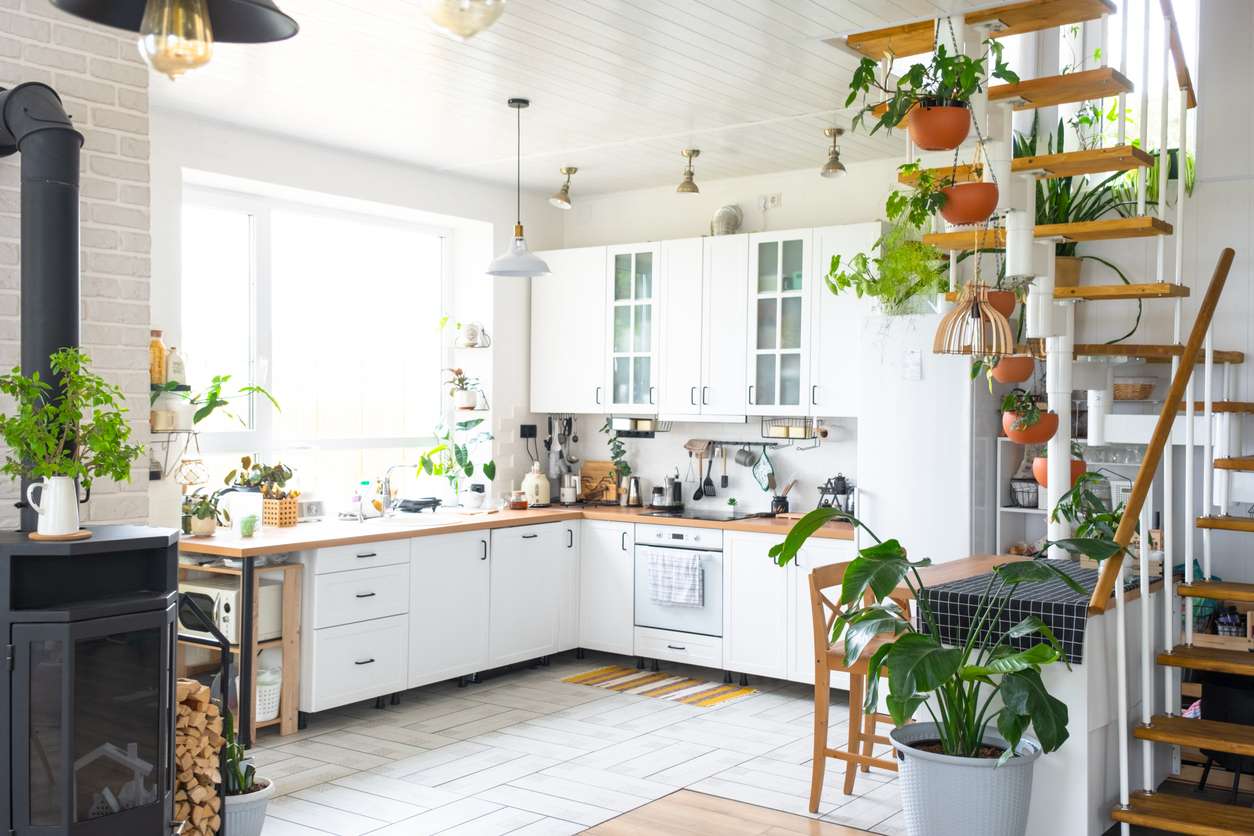
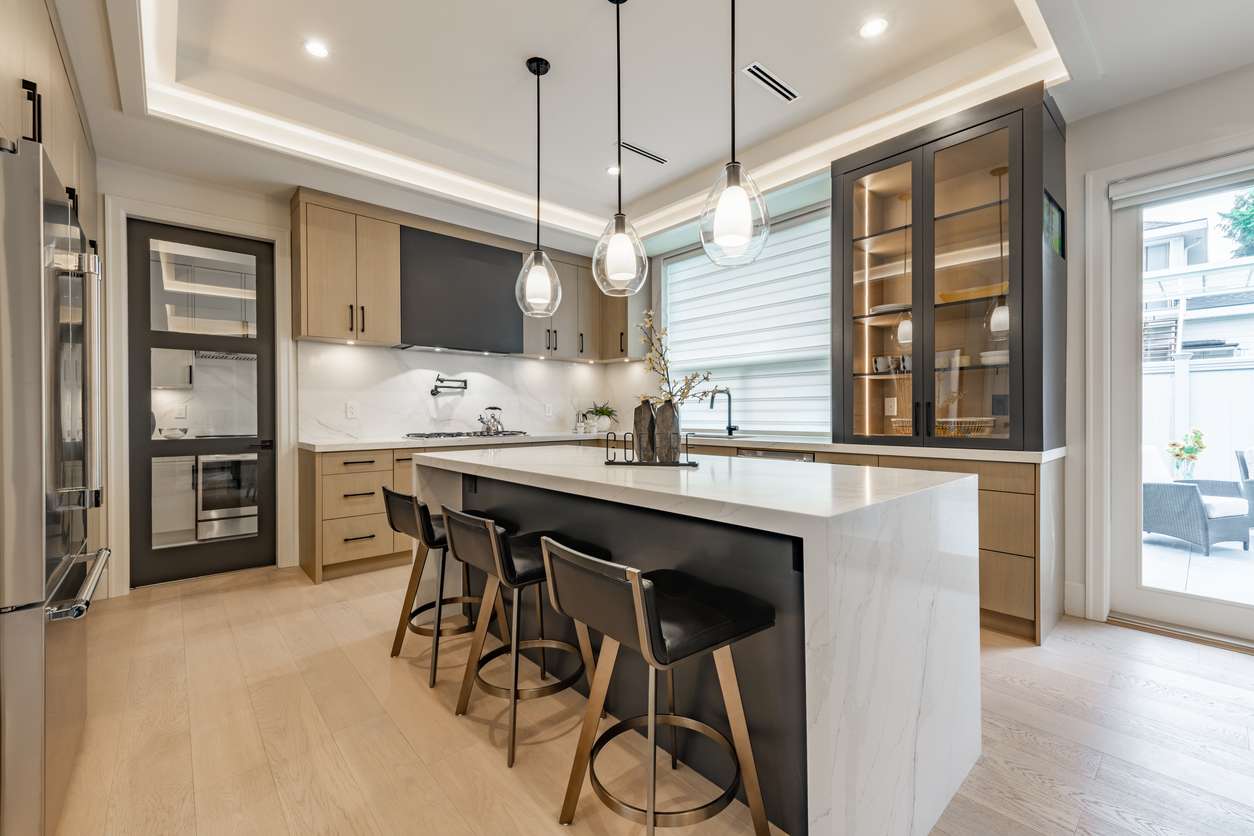
If you are planning a real, full-scope kitchen remodeling in Boise this year, you should expect starting costs to land around $50,000 for a standard footprint, scaling up to $100,000 or $150,000+ when layout changes, luxury finishes, and larger spaces are involved. While the internet is full of vague calculators suggesting you can overhaul the heart of your home for a fraction of that, the reality of a quality, professional kitchen remodel in the Treasure Valley is quite different. The difference between a frustrating remodeling experience and a seamless one begins with setting a realistic, scope-based budget from day one.
Executive Summary
The live search results for remodeling costs are dominated by national calculators that offer wide, unhelpful ranges, leaving Boise homeowners confused about what a real 200-square-foot project actually costs. True full-replacement remodels are already landing in the mid-$50Ks nationally, with larger or more custom kitchens quickly crossing into six figures. The biggest budget drivers aren’t just material upgrades — they’re layout modifications, professional labor, older-home structural surprises, and local Boise permit structures. Understanding these scope-based tiers — rather than relying on vague “basic, mid-range, upscale” labels — is the key to setting a realistic budget and comparing contractor quotes with confidence.
What does a realistic Boise kitchen budget actually look like right now?
A realistic budget depends less on the word “kitchen” and more on how much of the room you’re actually changing. If you’re replacing cabinets, counters, and appliances — and making even light layout improvements — you’re usually not in “cheap update” territory anymore. For a Boise-area homeowner trying to plan intelligently, the better question is whether your project is cosmetic, full replacement, or layout-changing.
National SERPs are famously vague, often blending DIY paint jobs with high-end luxury overhauls into a single “average.” But when we look at reliable, institutionally backed data, the picture becomes much clearer. A real full-scope kitchen remodel is already in the mid-$50Ks nationally. According to the 2026 U.S. Houzz Kitchen Trends Study, the median spend for a major kitchen remodel was $55,000, while the median spend for a major remodel of a larger kitchen (250 sq ft or more) sits at $75,000. If your kitchen is on the larger side, the “normal” major-remodel budget is already well above the low national averages you’ve been seeing.
Can you remodel a kitchen for $20,000? Yes — but usually only if the scope stays very narrow. That budget is consistent with a cosmetic refresh: painting existing cabinets, perhaps a new countertop, and updated hardware. If you want new cabinets, quartz, new appliances, and better function, $20K is more often the starting line for tradeoffs than the finish line. $20K is usually refresh territory, not dream-kitchen territory.
Is $30,000 enough for a kitchen remodel? Sometimes — but it depends on what you mean by “remodel.” If you can keep the footprint, avoid moving plumbing, and make highly disciplined material choices, $30K can cover meaningful improvements. However, for a standard 200-square-foot kitchen with dated cabinets and older counters, $30K is often below the threshold for a true full-replacement scope.
How do I know if my kitchen is a $50K project or a $100K project?
The budget jumps when you stop doing cosmetic work and start replacing cabinets, counters, and altering the layout. The 2025 U.S. Houzz Kitchen Trends Study provides additional context on the upper end of the market: the top 10% of spenders invest $180,000 or more on a major remodel of a high-end kitchen — triple the median. For kitchens over 250 square feet, that top 10% spends upwards of $200,000. Six-figure kitchens are common enough to show up consistently in national survey data.
To help you understand where your specific vision falls, we use a scope-based framing matrix rather than vague industry terms:
| Budget Tier | Project Scope & Characteristics | What It Usually Includes |
| Around $20,000–$30,000 | Cosmetic Refresh — Not a full dream-kitchen reset. | Keeping existing cabinet boxes (painting or refacing), upgrading to entry-level stone or laminate counters, replacing hardware, and swapping out basic appliances. The footprint and plumbing remain untouched. |
| $50,000+ | True Full Replacement Remodel — Realistic starting point for a complete overhaul. | Tearing out the old kitchen entirely. Installing brand new semi-custom cabinetry, high-quality quartz or granite countertops, new lighting, and upgraded appliances while keeping the existing walls and general layout intact. |
| $100,000+ | Layout Changes & Customization — When you need the room to function differently. | Taking down non-load-bearing walls, adding or significantly expanding a kitchen island, relocating plumbing and electrical, custom cabinetry storage solutions, and premium surface selections. |
| $150,000+ | Large, Ambitious, High-Finish — Normal for luxury, highly customized spaces. | Large square footage, structural wall removal, pro-grade panel-ready appliances, inset custom cabinetry, intricate lighting design, and premium stone slabs. |
What actually drives kitchen remodel cost up or down?
Cabinets usually lead the conversation because they shape both the look and the function of the whole room. However, layout changes can quietly outrun finish costs once they trigger electrical, plumbing, framing, permits, and additional labor. In plain language: cabinetry is the big-ticket visible cost, while reconfiguration is often the invisible multiplier.
The features homeowners want most right now — bigger islands, open layouts, better pantry space — are exactly the ones that raise the scope. If you want an island, you’re asking for one of the most common and budget-moving upgrades in modern kitchens. According to the 2026 Houzz study, more than half of renovating homeowners (52%) modify their kitchen’s layout during a major project. Reconfiguring a space requires a cascade of specialized trades to safely and legally alter the home’s structure.
Where does the money usually go in a full kitchen remodel?
Labor is not a fixed line item — it expands with scope, schedule complexity, and the number of trades involved. Once your project includes cabinets, counters, electrical, plumbing, finish carpentry, and project coordination, labor becomes one of the biggest reasons a quote feels higher than materials alone would suggest.
This is largely because today’s kitchen budgets are being shaped by real professional labor and project-management costs, not DIY assumptions. The market has shifted hard toward pro-led remodeling. Data from Improving America’s Housing 2025 by the Harvard Joint Center for Housing Studies shows that professionally installed improvements reached an unprecedented 84.1% of owner-occupied improvement expenditures — leaving the DIY share at a historic low.
Supplier pricing and logistical pressures continue to affect the bottom line as well. The Q3 2024 Kitchen & Bath Market Index (KBMI) from NKBA and John Burns Research and Consulting noted that K&B pricing growth accelerated again in the third quarter of 2024, with retail cabinet lead times representing a persistent planning challenge. Even before demolition starts, key pieces of your kitchen can add weeks to the timeline — requiring extended project management and coordination.
Labor scarcity is also a persistent factor. Every recent KBMI report has highlighted the cost and availability of skilled labor as the industry’s top challenge. Quality contractors who employ skilled tradespeople and run safe, clean jobsites are not priced like weekend handymen.
What hidden costs catch Boise homeowners off guard?
When you embark on a remodel in Boise, Eagle, or Meridian, the aesthetic choices are only half the battle. Older homes and local municipal requirements create hidden layers of cost that generic online articles frequently ignore.
Older-Home Surprises
A lot of kitchens sit inside aging houses, so “simple” remodels often uncover code, plumbing, wiring, or substrate issues. According to Improving America’s Housing 2025, the median age of owner-occupied homes in the U.S. reached 42 years. In the Treasure Valley, opening a wall in a 1970s home often reveals outdated electrical panels or plumbing that must be brought up to current code.
Additionally, older homes may trigger federal safety requirements. According to the EPA, nearly thirty percent of homes in the U.S. — mostly those built before 1978 — contain lead-based paint. Proper safe work practices and containment during renovation add necessary, and often unexpected, labor and material costs to your budget.
Boise Permit Math
Permit cost is layered — it isn’t one mystery line item. The City of Boise calculates permit fees based on the declared project valuation, and those fees stack up meaningfully for a mid-to-upscale kitchen project.
Here’s a concrete example using the Boise City Building Code Fee Schedule for a hypothetical $75,000 kitchen remodel:
- For projects valued between $50,001 and $100,000, the baseline building permit fee is $595.30 for the first $50,000.
- You are charged an additional $6.35 for each additional $1,000 in valuation.
- Math for the remaining $25,000: 25 × $6.35 = $158.75
- Base Building Permit Fee: $595.30 + $158.75 = $754.05
- Residential plan review fees are charged at 20% of the building permit fee.
- Plan Review Fee: 20% of $754.05 = $150.81
- Total Building and Plan Review Fee: $904.86
But it doesn’t stop there. Plumbing, electrical, and mechanical work each require their own trade permits, with individual fees for fixtures and systems. (Note: Fee schedules are subject to change, so current municipal rates should always be rechecked before final permitting at cityofboise.org.)
Why do kitchen quotes feel so different from one contractor to another?
It’s common to receive three quotes for the “same” kitchen remodel and find a $30,000 variance between the lowest and the highest bid. This rarely comes down to simple greed. Quote differences often stem from hidden scope assumptions, material grades, scheduling discipline, cleanliness standards, and project management depth.
A lower quote often assumes builder-grade materials, minimal structural reinforcement, and less hands-on coordination throughout the project. It might omit the cost of a dedicated dumpster, daily jobsite cleanup, or the floor protection required to keep the rest of your home intact during weeks of construction. A higher quote usually reflects a fully managed process: dedicated on-site supervision, premium materials specified upfront — rather than buried in low “allowances” — and a commitment to maintaining your home’s livability during construction.
Knowing the right questions to ask before you sign is how you tell the difference. We’ve put together a detailed guide on how to choose kitchen remodel contractors in Boise and Eagle — including 10 questions that help you identify true professionals and spot red flags before any money changes hands.
Is Pristine Kitchen & Bath’s pricing actually reasonable for this market?
At Pristine Kitchen & Bath, our pricing reflects what it genuinely takes to do this right — licensed trades, real materials, and a fully managed process from start to finish. Our $50K, $100K, and $150K+ tiers are not arbitrary numbers; they are evidence-grounded benchmarks that align with both local Treasure Valley costs and independent national industry sources.
As the data from Houzz and the Harvard Joint Center for Housing Studies confirms, professional, pro-installed remodeling requires a realistic financial commitment. When we quote a $100,000 kitchen, it’s because we’re accounting for the permit fees, the high-end quartz, the custom cabinetry lead times, the licensed electricians and plumbers, and the meticulous project management required to execute layout changes safely and beautifully. Our pricing is reasonable because it reflects the true cost of doing the job correctly the first time, without cutting corners on quality or safety.
You can learn more about how we structure every project from first conversation to final walkthrough on our remodel process page.
What should I know before I talk to a contractor for the first time?
The right first conversation starts with scope clarity — not just a request for a price. Before you invite a contractor into your home, it helps to have a firm sense of your budget boundaries and whether you’re seeking a surface-level refresh or a full structural remodel.
You also need to know how to evaluate what you’re hearing. Our guide on questions to ask kitchen remodel contractors in Boise and Eagle will walk you through exactly what to look for — from daily site management to how they handle older-home surprises to what a real contract should include.
The smart next step for your Boise kitchen
Navigating the financial realities of a kitchen remodel doesn’t have to be a stressful, opaque process. By understanding the true scope-based costs of a 2026 renovation, you’re already far ahead of the curve. You know that a $50K budget represents a solid, full-replacement project, while layout changes and luxury features push the investment higher — and you know why.
The smartest next step is sitting down with a team that values transparency as much as you do. Bring your ideas, your budget questions, and your vision. We’ll give you an honest assessment of what it will take to bring your dream kitchen to life in the Treasure Valley.
When you’re ready to talk through your project, reach out to schedule a no-pressure consultation. It’s our dream to give you your dream.